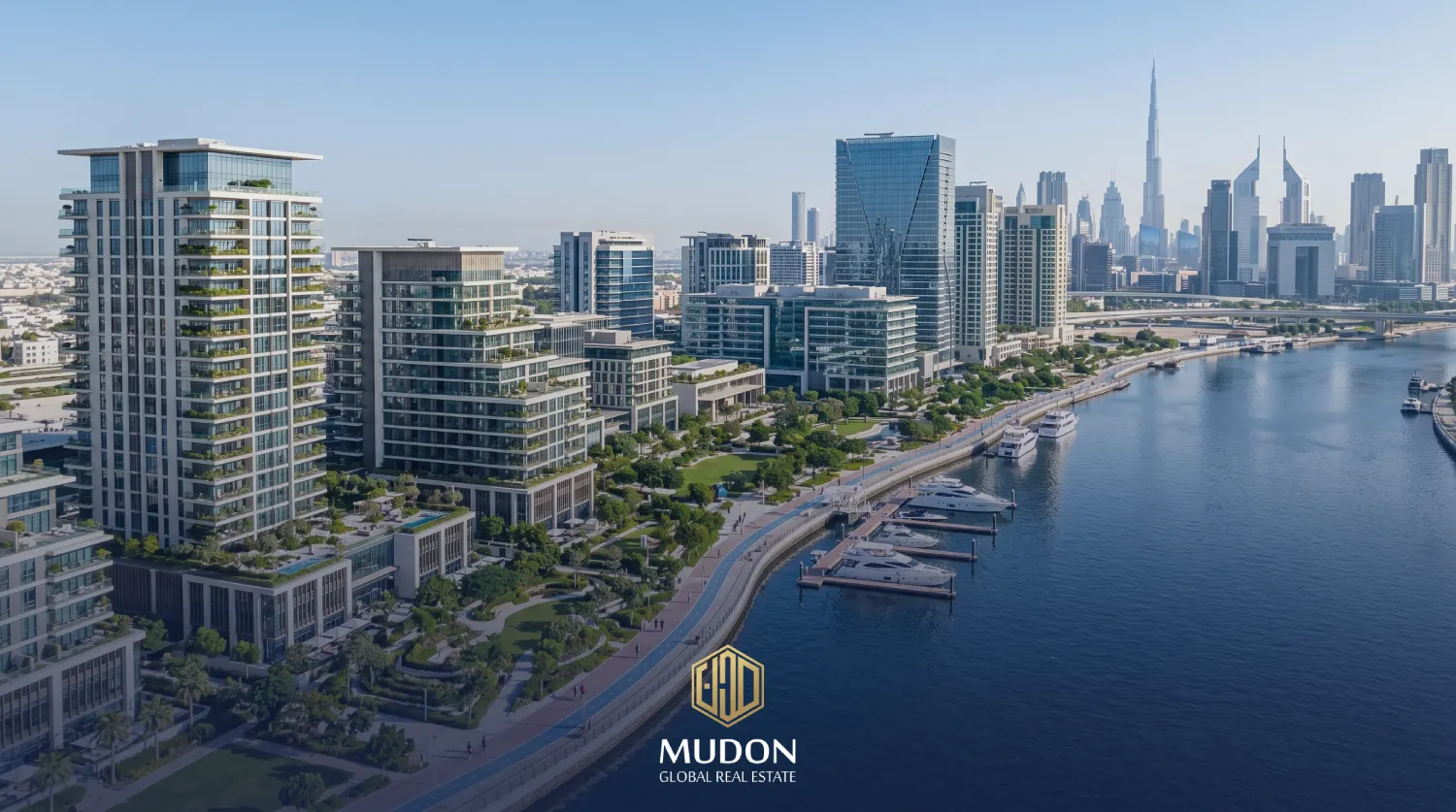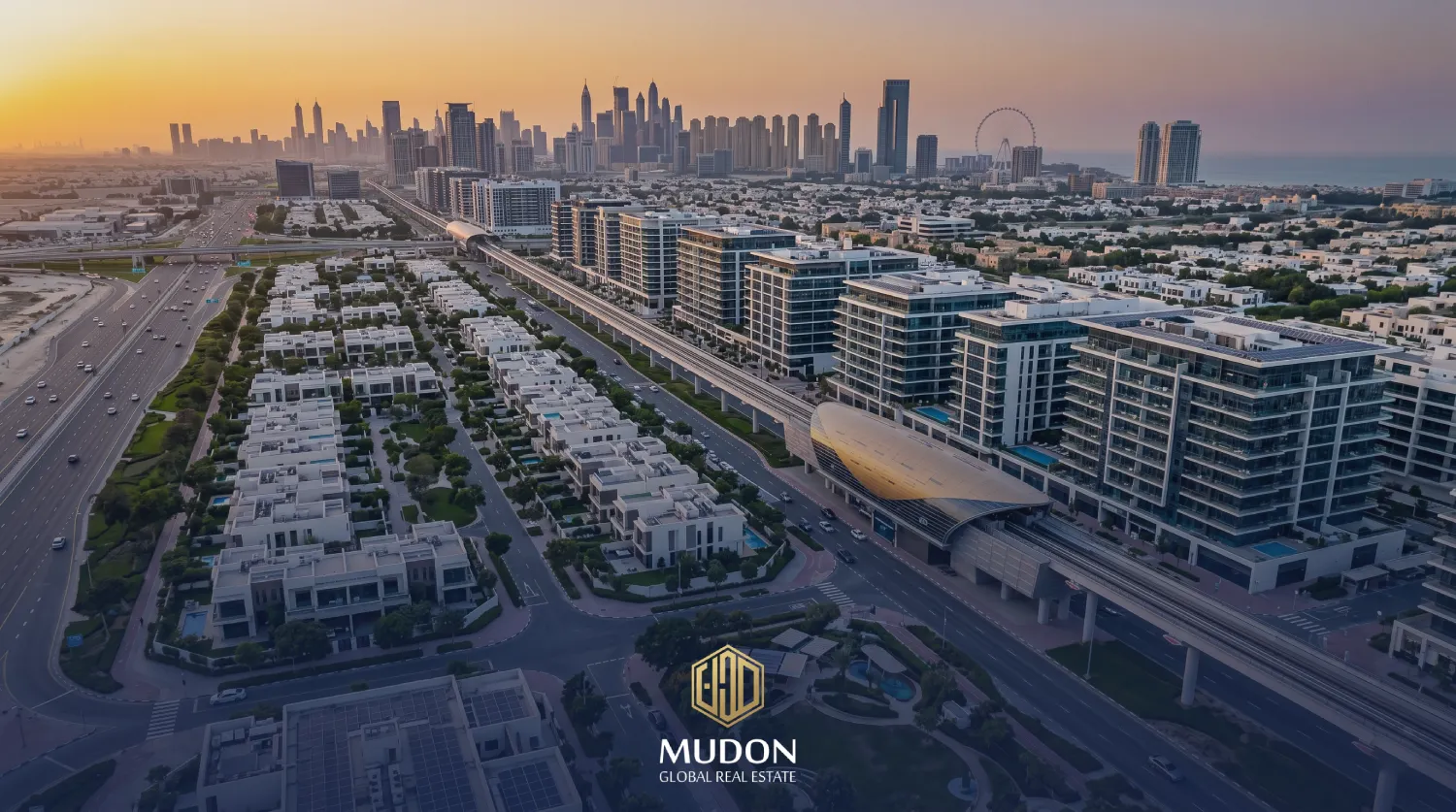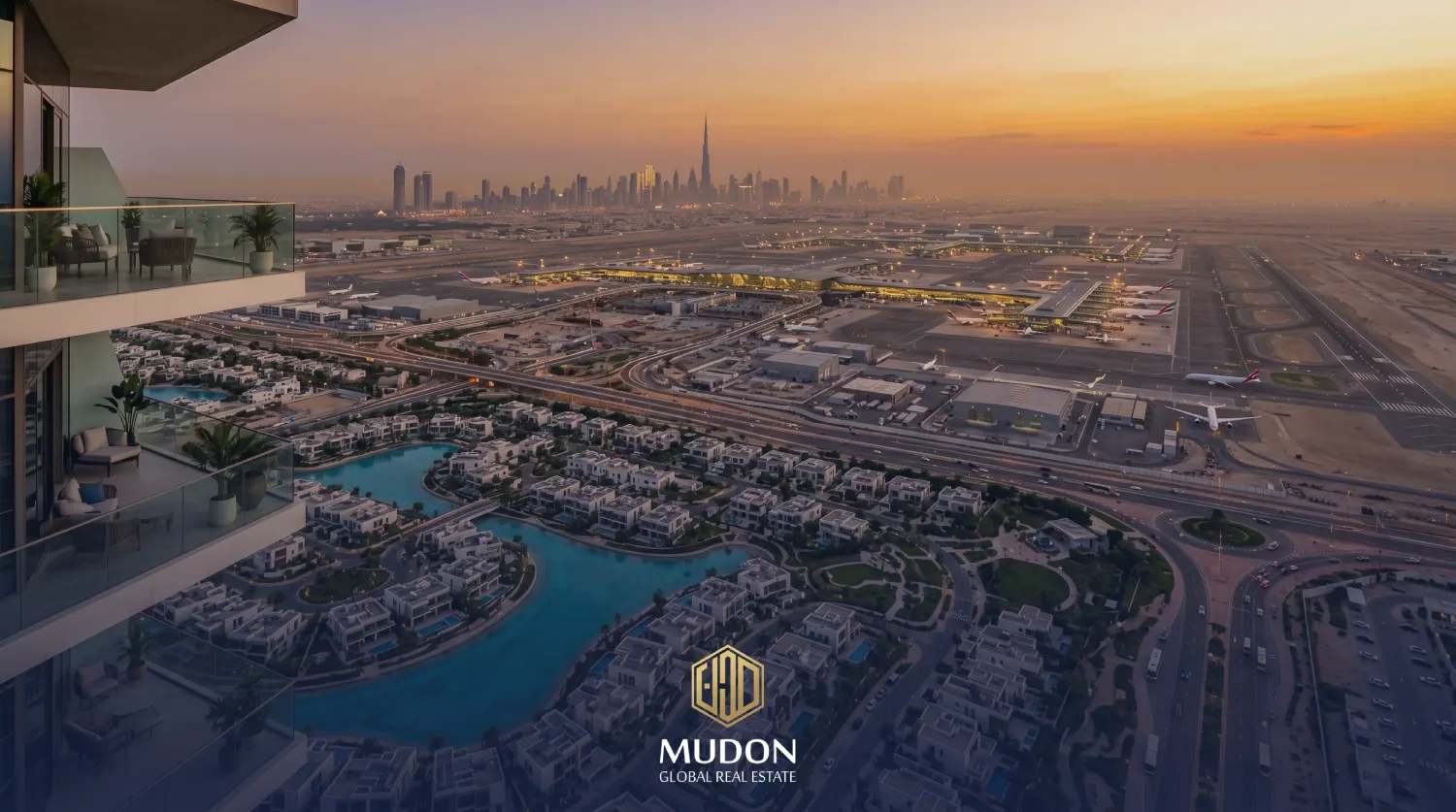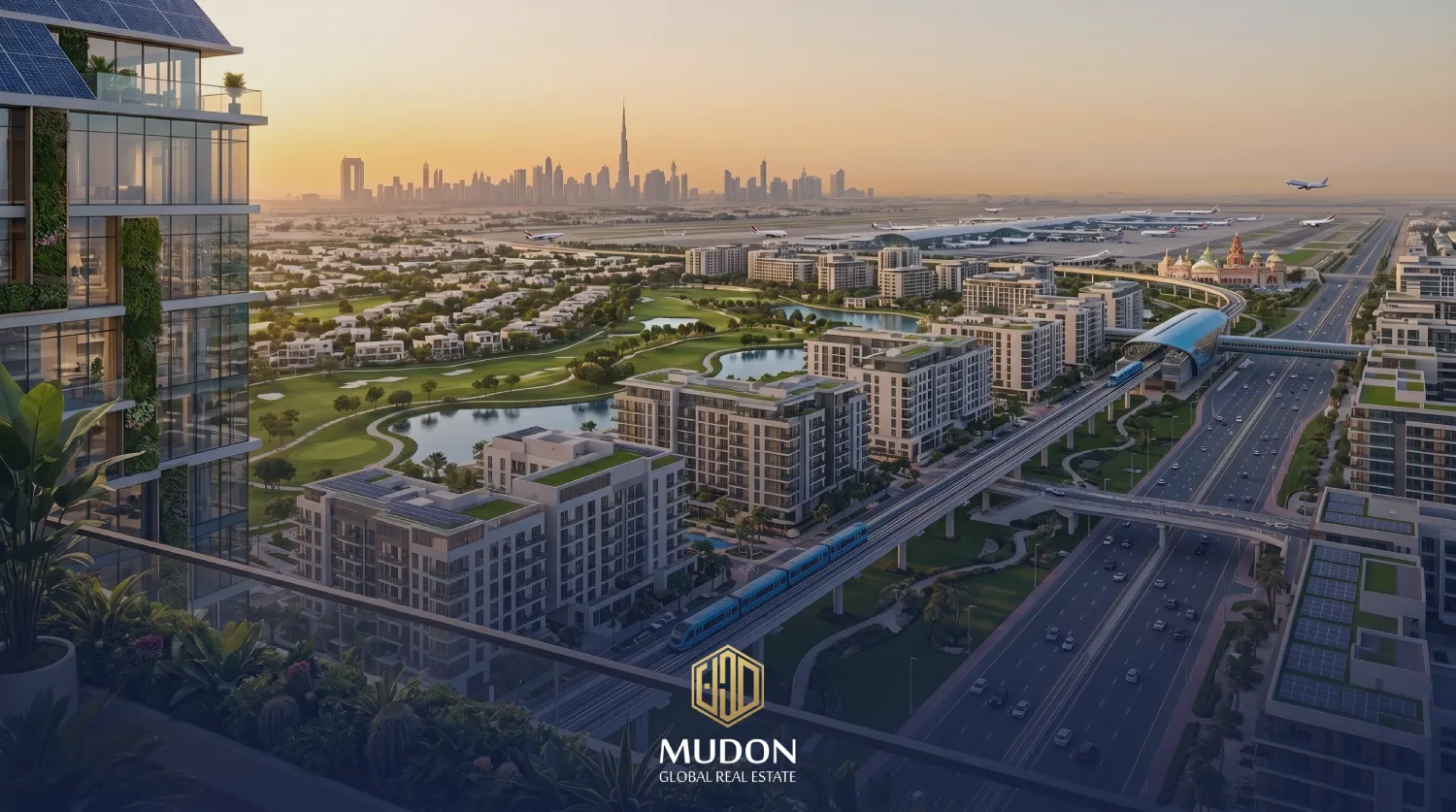
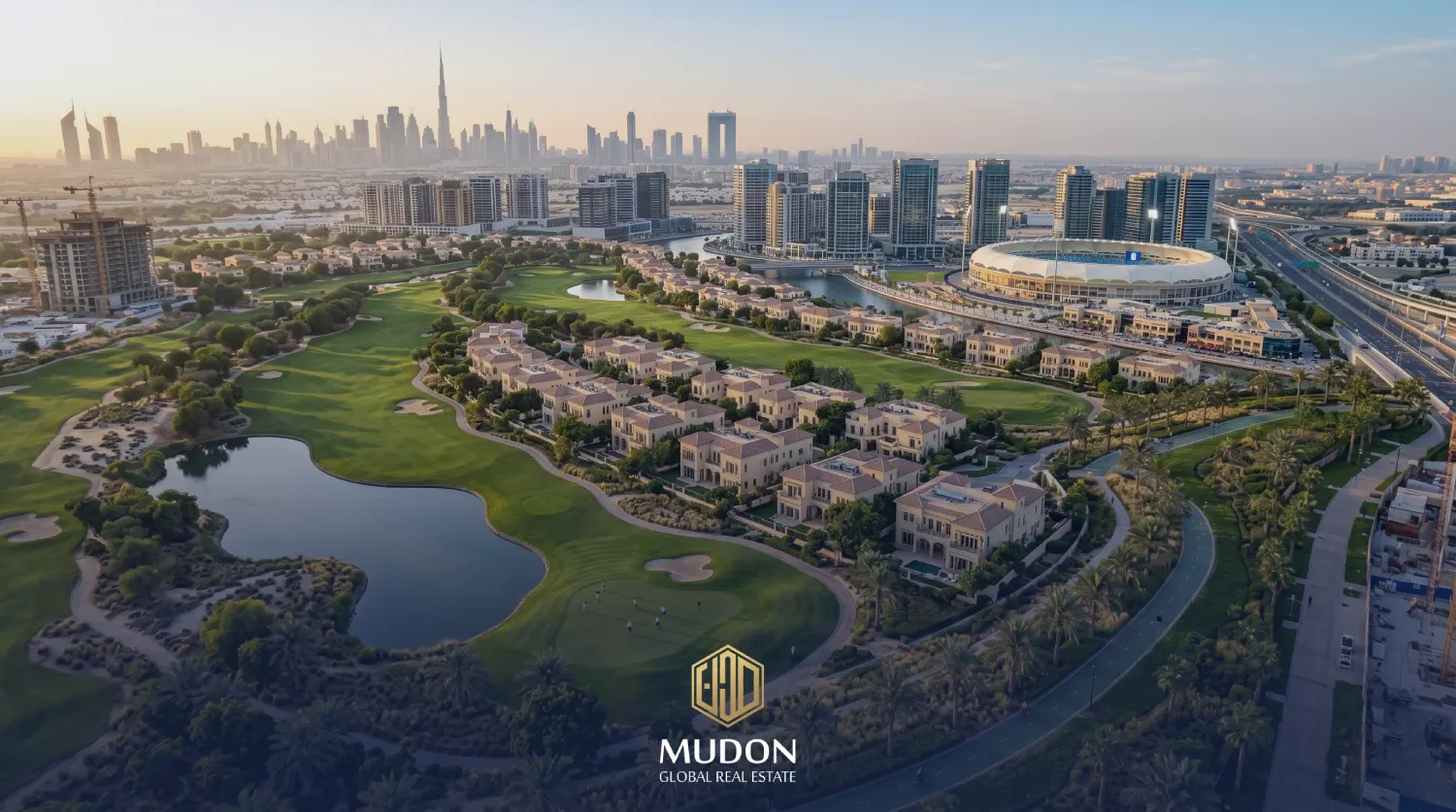
In the institutional real estate investment landscape of 2026, power centers are constantly shifting. For Dubai Sports City, the era of heavy off-plan development has ended, and the district is now emerging as a highly mature urban community and one of Dubai’s most important pillars within the Mid-Market Premium segment.
In line with our analytical methodology, which moves away from repetitive marketing narratives and focuses on hard numbers, we present this comprehensive guide. This report is designed to unpack the mechanisms of intrinsic value, operating performance indicators, and the dramatic impact of infrastructure development on asset valuations in the current cycle.
Table of Contents
Geographic and Economic Identity: What is Dubai Sports City from a capital perspective?
For the international investor reading Dubai’s map from abroad, the name Dubai Sports City may, at first glance, appear to be a closed compound of stadiums and seasonal sports facilities.
However, when this geographic area spanning 50 million square feet is analyzed through the lens of “2026 Financial Valuation and Demographic Analysis”, a very different investment reality emerges.
The district is now classified as a “Wellness & Active Lifestyle Hub”, representing the tougher benchmark and leading player in Dubai’s new Mid-Market Premium segment. It is no longer merely a construction shell; it has matured into a fully self-sufficient ecosystem, precisely balancing low-density living and expansive green space with vertical towers that generate intensive returns.
To understand how liquidity moves and valuations compound within this district, its core identity must be broken down through the following institutional lenses:
1. The sustainable master plan and the resilience of the sports moat
Dubai Sports City was not developed through random real estate expansion; it was delivered under a sovereign master plan designed to integrate luxury residential assets with the emirate’s most mature sports and educational infrastructure.
The district is home to exclusive facilities that cannot be replicated in neighboring communities, such as the world-class The Els Club, Dubai International Stadium, and professional cricket and football academies. This monopoly over amenities gives the surrounding properties a scarcity premium that protects their capital value from cyclical market fluctuations.
2. The demographic shift and the wellness economy in 2026
Tenant and buyer preferences in Dubai, following the pandemic and into 2026, have shifted decisively toward health-oriented communities.
Dubai Sports City has become the natural destination for this demand, attracting a high-credit demographic of expatriate families, young professionals, and executive talent seeking generous space, integrated elite education institutions (such as GEMS Founders School and the prestigious Jumeirah School), and the ability to enjoy an active lifestyle on foot.
This human settlement generates inelastic rental demand, ensuring owners long-term operational stability.
3. Financial positioning: leadership in the ultra-capital-efficient category
In 2026 wealth management literature, Dubai Sports City derives its appeal from solving the hardest investment equation: the lowest possible price per square foot for luxury projects + the highest net rental yields in the market.
The district functions as a magnet for absorbing surplus liquidity from ultra-expensive coastal areas such as Palm Jumeirah and Dubai Marina, offering investors a compelling opportunity to build a cash-generating real estate portfolio with net yields ranging between 6% and 7.5%. This makes it a preferred choice for institutional capital and family offices seeking defensive assets and genuine operating returns.
The 2026 logistical shift: engineering traffic flow liquidity and unlocking retained value
In real estate development and urban planning, an asset’s value is measured by its logistical flexibility and its ability to reduce logistical friction. Historically, Dubai Sports City (DSC) suffered from a clear financial challenge: the district possessed exceptionally high-quality real estate assets in terms of construction, size, and views, but capital and rental valuations were constrained by a chronic traffic bottleneck at the entrances and exits, particularly along Hessa Street.
In 2026, the full fruits of the largest development plan executed by the Roads and Transport Authority (RTA) were realized, producing a complete logistical shift that reset the district’s financial equations and transformed it from a congested geographic pocket into one of the most fluid urban nodes in new Dubai.
First: crushing traffic bottlenecks and engineering free flow
The recent expansions of Hessa Street were not merely the addition of extra lanes; they were a structural re-engineering of the arterial corridors surrounding the district as a whole:
Eliminating critical junction points
The multi-billion-dirham project included advanced multi-level flyovers and the replacement of old circular traffic lights with free-flowing ramps. This development completely eliminated the traffic backlog that once extended for kilometers into the district’s neighborhoods.
Reducing travel time
The numerical translation of this logistical shift was a traffic bottleneck reduction of more than 40%. A resident of Dubai Sports City can now leave their community gate and reach major employment and business hubs such as Dubai Marina, Media City, and Sheikh Zayed Road in just 18 minutes, whereas the same journey used to take 45 to 50 minutes during previous peak hours.
Second: unlocking the retained value of real estate assets
In real estate financial analysis, retained value refers to the condition in which an asset trades at a forced discount due to external factors (such as weak infrastructure) rather than defects in the asset itself.
Intrinsic valuation concept: If construction quality and amenity levels justify the asset trading at value X, but it actually trades at X−Δ because access is difficult, then Δ represents the trapped retained value. Once the logistical barrier is removed, value naturally moves toward fair market price:
True Market Value=Structural Quality+Frictionless Mobility
This is the pricing adjustment currently taking place in the district. Residential towers and villa communities have always possessed underlying structural advantages—larger room sizes, solid finishes, and views over green golf courses—and with traffic congestion removed, this trapped value has been released abruptly, prompting owners to reprice their assets based on their new urban efficiency.
Third: the spillover effect and capital migration
This logistical shift has triggered a significant spillover effect in demand from neighboring and higher-end areas:
Migration of high-credit-quality tenants
The executive tenant or expatriate family is no longer forced to pay astronomical premiums to settle in Dubai Hills or Al Barsha simply to avoid road congestion. The removal of the psychological barrier created by Hessa Street has made Dubai Sports City the natural destination for absorbing excess demand.
Changing the area’s demographic profile
The district has begun attracting a completely new class of residents—doctors, engineers, and regional managers—who prioritize spatial and financial efficiency.
This high-quality inflow of people has pushed occupancy levels to record highs and given investors exceptional tenant creditworthiness and a sharp reduction in default risk.
Fourth: the accelerated price convergence phenomenon
From a purely investment perspective, Dubai Sports City is undergoing an inevitable price convergence with more expensive neighboring communities.
The historical discount gap that once separated Dubai Sports City prices from surrounding areas has begun to narrow rapidly and linearly.
This sharp upward price movement ensures that investors who established positions early capture exceptional capital gains, driven entirely by the market’s revaluation of the district as a central, connected, and integrated part of new Dubai without any logistical friction.
The circular sports economy: the district’s identity and a magnet for captive demand
In modern real estate valuation, a strict distinction is made between commoditized assets—traditional apartments that can be built anywhere and are subject to fierce price competition—and ecosystem-backed assets that derive their value from an economic system protected by geographic and regulatory barriers.
Dubai Sports City’s 2026 intrinsic value is not derived solely from concrete quality or interior design, but from the circular sports economy that connects sovereign infrastructure, daily human activity, and property cash flows.
This system creates a highly durable economic moat that reshapes the investor’s understanding of yield and financial security through the following channels:
First: sovereign infrastructure with high barriers to replication
The first pillar of the district’s economic moat is the scale of capital expenditure (CAPEX) invested by the state and the master developer in internationally accredited world-class sports facilities.
Barrier to entry for competitors
Emerging or neighboring real estate communities, such as Jumeirah Village Circle (JVC) or Arjan, cannot replicate an asset on the level of The Els Club, spanning vast green areas and designed by world golf champion Ernie Els, nor rebuild the ICC Academy with its indoor and outdoor pitches and sports analytics technology systems.
Insulating capital value against oversupply
The presence of these assets protects the district from the risk of a supply glut. Regardless of how much is built in Dubai, apartments and villas overlooking golf courses and adjacent to international academies remain inherently scarce assets due to their geographic nature. This scarcity translates financially into absolute protection of real estate value from declines during broader market corrections.
Second: engineering a captive audience and the economy of knowledge and sports labor
The dense presence of these academies, stadiums, and specialized sports medical centers does not merely create leisure events; it generates a constant and stable human flow from a high-income, quality demographic known in real estate as the captive audience:
Target elite profile: This sports audience includes professional athletes, medical teams specializing in sports injuries, club managers and administrative consultants, and expatriate families from the upper-middle and high-income brackets who place wellness and physical activity at the center of their lifestyle.
Inescapable geographic linkage: These individuals do not enjoy the luxury of geographic flexibility; they are tied to strict daily training schedules, academy timetables, and specialized workplaces within the district. This connection prevents them from living far away simply to avoid wasting time commuting, making them geographically captive to Dubai Sports City and directing their rental capital almost exclusively toward the district’s properties.
Third: the language of numbers for 2026: community maturity and the creation of inelastic demand
The operating fundamentals in Dubai Sports City changed by 2026, as the community master plan reached full maturity, clearly reflected in the performance of the area’s affordable and integrated educational and service facilities:
Educational waiting lists as a financial lever for owners: Major international schools located in the heart of the district, such as GEMS United School and Victory Heights Primary School, along with professional training facilities, recorded record waiting lists for 2026 that exceeded classroom capacity.
High switching costs: In financial analysis, when a family settles into a property and enrolls its children in a nearby elite school, the cost of moving elsewhere becomes extremely high both emotionally and financially. Leaving the area means losing a hard-won school place or sacrificing the family’s daily comfort.
Securing net rental returns: This educational and community maturity turns rental demand in the district into inelastic rental demand, where tenants become less price-sensitive and more willing to accept rational annual rent increases and renew their leases rather than move.
The direct financial impact on your investment portfolio
Inelastic demand and insulation against vacancy ⟶ demographic anchoring of elite labor and athletes ⟶ sovereign infrastructure
This structural alignment ensures that investors owning compact assets (studios and one-bedroom units near the canal and key hubs) or villas in gated communities achieve three decisive financial advantages:
- Zero tenant churn: Tenants remain for periods ranging from 3 to 5 years, eliminating interim maintenance costs and repeated brokerage fees.
- Net cash flow stability: The net returns of 6% to 7.5% in Dubai Sports City today are not temporary speculative figures; they are flows protected by market reality and by a well-established educational and sports master plan.
- Resistance to cyclical slowdown: If the broader real estate economy experiences a slowdown, captive-demand communities remain the most occupied and the quickest to recover, because the residential motivations here are driven by lifestyle, family, and work imperatives—not transient consumption.
Asset classification and capital allocation: the Dual-Strip Framework
In modern real estate portfolio engineering for 2026, treating Dubai Sports City (DSC) as a single investment block is a fundamental mistake that distorts capital efficiency assessment. The district’s structural maturity has divided the property supply geographically and operationally into two entirely separate financial worlds.
To achieve a balanced equation between asset safety and cash flow strength, Mudon Global developed the Dual-Strip Framework. This strategy enables family offices and individual investors to allocate capital based on actual operating performance rather than marketing promises:
First: the prestige and hedge strip (Victory Heights) — the portfolio’s defensive shield and wealth preservation
The Victory Heights enclave represents the low-density horizontal band at the heart of the district, comprising upscale gated communities arranged symmetrically around the expansive golf areas of The Els Club.
Asset architecture and the scarcity premium
This segment is centered on luxury villas and townhouses (3 to 5-bedroom layouts). Standard units (3-4 bedrooms) currently range between AED 4.5 million and AED 8.5 million. The intrinsic value here is protected by what is known as the geographic scarcity premium; all golf-view plots have already been fully absorbed, preventing any future supply shocks that could pressure prices.
Demographic profile
This strip targets HNWIs, senior executives, and settled Western and local families whose employment is linked to the production zones and neighboring Jebel Ali, and who rely on elite international schools within the community.
Financial behavior and hedging mechanism (Volatility Damping)
This asset is classified as a capital preservation and macro-inflation hedge vehicle. The operating mathematics here record an almost complete absence of tenant churn, with residence contracts extending over long periods due to the high switching costs associated with family stability and hard-to-secure school places.
Net ROI ranges between 4.5% and 5.5%. It is a moderate rate, but it compensates through strong, sustainable capital gains and absolute resilience during economic downturns.
Second: cash-flow engines (Modern Towers & Hub Canal) — high-yield machines
This strip represents the district’s vertical urban band, centered around the Hub Canal and the community’s external logistical arteries. It includes modern luxury towers and integrated projects.
Spatial efficiency and entry price compression
The asset architecture here is based on luxury studios and one-bedroom apartments, focused on space optimization.
The first quarter of 2026 saw the delivery of landmark projects that elevated the district’s quality benchmark, such as Binghatti Haven, alongside rapid construction progress in projects like Mag 777 and Sportz by Danube.
Absorptive entry price matrix
Luxury studios start from AED 440,000 to AED 600,000, while one-bedroom units range between AED 720,000 and AED 1 million.
This range allows investors to apply a bulk buying tactic; that is, acquiring 3 to 4 compact units with the same liquidity as one apartment in the city center, thereby crushing concentration risk.
Financial behavior and yield farming
This segment is the true financial engine for generating rapid cash in the portfolio. Demand here is driven by young professionals and administrative teams working in the nearby free zones (TECOM, Motor City, and Jebel Ali).
These assets generate gross yields exceeding 8%, stabilizing as robust and sustainable net yields between 6.0% and 7.5% after maintenance and operating expenses, significantly outperforming the margins of saturated central markets.
Financial allocation architecture matrix (Dubai Sports City 2026)
| Benchmark and operating indicator | Prestige and hedge strip (Victory Heights) | Cash-flow engine strip (Hub Canal & Towers) |
| Structural asset type | Gated villas and townhouses (golf-facing) | Compact and smart apartments (studios and 1BHK) |
| Entry price range (AED) | 4,500,000 – 8,500,000 | 440,000 – 1,000,000 |
| Portfolio financial objective | Capital preservation and secure capital growth | Maximizing cash flow and monthly liquidity |
| Optimal operating model | Long-term hold strategy (Buy & Hold) | Intensive annual leasing / flexible management (PropTech) |
| Tenant turnover rate | Approaches zero (extended family stability) | Average (requires flexibility and digital management) |
| Net rental ROI | 4.5% – 5.5% | 6.0% – 7.5% |
Mathematical modeling for optimal portfolio blending
To achieve maximum financial efficiency and avoid yield volatility, we advise institutional investors not to place all liquidity in a single strip, but rather to mathematically blend the two strips based on price-curve balance.
If the objective is to build a balanced portfolio worth AED 10 million, the optimal allocation follows the formula below to produce a stable and protected return:
Portfolio Allocation = (1 × Villa in Victory Heights) [50% allocation to capital growth] + (4 × Smart Units near Hub Canal) [50% allocation to high cash flow]
This surgical mix ensures the investor deploys defensive brakes that shield capital wealth from inflation through villas, while simultaneously operating cash machines through compact apartments that inject exceptional recurring liquidity, cover obligations, and enable continuous reinvestment to capture 2026 market opportunities.
Smart real estate operations (PropTech): software engineering for assets and crushing operating expenses (OPEX)
In the 2026 real estate cycle, a profound shift took place in asset management standards. The latest projects in Dubai Sports City (DSC) moved beyond the traditional concept of real estate as a static concrete mass and adopted the philosophy of “Software-Defined Real Estate”.
This means integrating biotechnology and the Internet of Things (IoT) into the structural core of buildings, transforming property management from reactive responses into automated predictive maintenance.
For the strategic investor, this digital shift is not merely a technological luxury; it is a highly precise financial tool designed specifically to reduce waste, crush expenses, and insulate net profit margins from erosion through the following structural channels:
First: a SaaS-style management experience and advanced digital dashboards
Today’s modern real estate portfolios in Dubai Sports City are managed through integrated platforms that mirror Silicon Valley SaaS interfaces. These platforms feature clean user interfaces (UI), relying on clear vector lines and smooth color gradients that give the investor an immediate and calm reading of asset performance:
Remote control and analysis (Remote Telemetry)
These operational dashboards allow the investor—whether in Dubai or managing the portfolio from abroad—to monitor live district cooling consumption rates for each unit. This connectivity makes it possible to detect and algorithmically adjust any abnormal consumption behavior, protecting meters from sudden spikes.
Operational transition to predictive maintenance
Instead of waiting for a malfunction and the resulting interruption to air conditioning or water flow—which leads to expensive emergency repair costs that erode returns—AI algorithms connected to building sensors analyze the efficiency of mechanical systems and facilities.
These systems detect any performance deterioration weeks before an actual failure occurs and issue an automated maintenance request to the technical team, reducing emergency maintenance expenses by up to 45%.
One-click leasing cycle automation
These smart platforms connect directly to Dubai’s Real Estate Regulatory Agency (RERA) digital ecosystem and the Ejari system portals. This API integration enables contract renewals, payment collection through digital channels, and the deposit of net profits into the investor’s bank account without any human intervention or the need to deal with traditional paper checks and legal chases.
Second: operational analysis: how does PropTech crush OPEX costs?
This software precision is reflected immediately in the property’s financial statements through the re-engineering of building operating expenses (OPEX). In traditional real estate, large cash outflows from the owner’s revenue are consumed by energy waste, conventional management company fees, and emergency expenses.
In the smart towers of Dubai Sports City—such as the latest projects around the canal and the connected tower strip—automation systems reduce energy consumption in corridors, parking, and common facilities by between 30% and 35%. This direct reduction in building utility bills prevents annual management budgets from inflating.
Third: the language of numbers: service charges and securing net ROI
The direct result of crushing operating expenses is that the annual service charges paid by the investor to the master developer remain in a highly competitive and attractive range of AED 13 to AED 19 per square foot (depending on the tower category and amenities).
To understand the decisive mathematical impact of these competitive charges on protecting your profit margins, we set out the difference between a smart property and a conventional property in the table below:
Financial efficiency comparison: the impact of PropTech on net returns (AED 800,000 unit – 800 sq ft)
| Financial and operating indicator | Conventional real estate tower (manual management) | Smart real estate tower (PropTech / 2026) |
| Gross rental ROI | 8.5% (AED 68,000 annually) | 8.5% (AED 68,000 annually) |
| Annual service charges (per sq ft) | AED 26 per square foot (high due to waste) | AED 15 per square foot (thanks to energy optimization) |
| Total annual maintenance deduction | AED 20,800 | AED 12,000 |
| Hidden emergency maintenance budget | AED 5,000 (unexpected breakdowns) | AED 0 (automated predictive handling) |
| Owner’s actual net cash flow | AED 42,200 | AED 56,000 |
| Final net rental ROI | 5.27% (margin erosion) | 7.00% (full return insulation) |
Financial performance indicators (Total Return Profile): portfolio engineering and capturing superior alpha returns
In institutional real estate investment literature, alpha generation refers to the ability to produce superior investment returns that exceed the general market average after risk adjustment.
In the 2026 real estate cycle, capturing alpha returns is no longer possible through upward speculation in saturated luxury districts, but through dissecting the total return profile of mature areas with latent, structural growth drivers.
Dubai Sports City (DSC) today presents a strict financial model grounded in hard numbers and direct benchmark indicators, enabling investors to craft an entry strategy that maximizes capital gains while capturing cash flows through the following financial channels:
First: the supported capital growth curve
Dubai Sports City’s real estate valuation is undergoing a highly important transitional phase, moving the district from a violent corrective upswing into a phase of sustainable structural growth:
Historical phase (2022 – 2025): The district recorded exceptional capital growth ranging between 8% and 12% annually, driven by the market absorption of older stock, the broader recovery of southern Dubai, and the beginning of liquidity rotation toward the Mid-Market Premium segment.
Current and future phase (2026 onward): Forward capital growth forecasts are now stabilizing transparently and securely at a range of 4% to 7% annually. This stability is not a slowdown, but rather a sign of market maturation.
Sustainable growth drivers: This growth is supported linearly by full market absorption of the Hessa Street logistical improvements, and by successive waves of handovers of luxury hotel and residential towers (such as Binghatti Haven and the projects around Hub Canal), which steadily raise the intrinsic value per square foot in the district and establish a new price floor that cannot be breached downward.
Second: breaking down the superior investment equation
A professional wealth manager does not view rental return separately from asset value growth; instead, both axes are mathematically combined to reach the portfolio’s annual total return. In Dubai Sports City 2026, the investment alpha equation is formulated as follows:
Total return (Alpha) = Net rental yield + Forward capital appreciation
When this mathematical equation is applied to the district’s current operating fundamentals, the following numbers emerge:
- Actual net rental yield: ranges between 6.0% and 7.5% thanks to low entry prices and inelastic demand from captive audiences.
- Safe capital growth outlook: ranges between 4.0% and 7.0%.
- Total net return outcome: combining both sides, the annual portfolio return climbs to a range of 10.0% to 14.5%. By global investment standards, this is outperformance, as it delivers double-digit returns in a mid-risk area with fully completed infrastructure.
Third: tactical comparison and geographic arbitrage: Dubai Sports City vs. Motor City
To highlight the underlying financial viability of Dubai Sports City, it must be directly compared with its neighbor and traditional rival, Motor City. This comparison allows investors to understand where the future profit gap lies:
The Motor City real estate equation
Motor City is a highly mature community, and its older ready properties are capable of generating a purely rental return that may slightly outperform by very small fractions—sometimes reaching 7.8% net—because older stock can be purchased at lower prices relative to its large unit sizes.
However, from a capital growth perspective, Motor City’s price curve is approaching full flattening, as there is insufficient new land within the old master plan for further development, which limits resale profit opportunities.
The superior Dubai Sports City equation
By contrast, Dubai Sports City in 2026 offers the ideal blend: it provides investors with solid rental returns (6.0% – 7.5%) while decisively outperforming in forward capital growth expectations.
This advantage is driven by the stream of new and smart (PropTech-enabled) assets being delivered, which are reshaping the district’s identity and attracting fresh buying liquidity capable of pushing overall prices higher with exceptional flexibility.
Comparative financial analysis matrix for 2026
| Investment and financial indicator | Dubai Sports City | Motor City community |
| Average net rental yield | 6.0% – 7.5% (stable, technically protected returns) | 6.5% – 7.8% (strong performance driven by older stock) |
| Capital growth outlook (2026+) | 4.0% – 7.0% (an upward curve supported by handovers) | 1.5% – 3.0% (a stable curve and near-saturated assets) |
| Project inventory and architectural innovation | Very high (smart towers integrated with pools and PropTech) | Low (most supply is classic legacy stock) |
| Annual portfolio total return | 10.0% – 14.5% (capturing superior alpha returns) | 8.0% – 10.8% (safe, cash-flow-only performance) |
| Outcome and strategic recommendation | The optimal choice for balancing income and asset growth | A suitable option for the investor targeting pure rental income |
Start engineering your real estate portfolio today: contact Mudon Global
Securing strategic assets and capturing valuation arbitrage gaps before they close requires disciplined action and precise financial guidance. Whether your investment objective is acquiring smart, PropTech-enabled apartments to generate intensive cash flow, or owning luxury villas for wealth preservation and inflation hedging, the advisory and asset management team at Mudon Global is ready to provide full executive support.