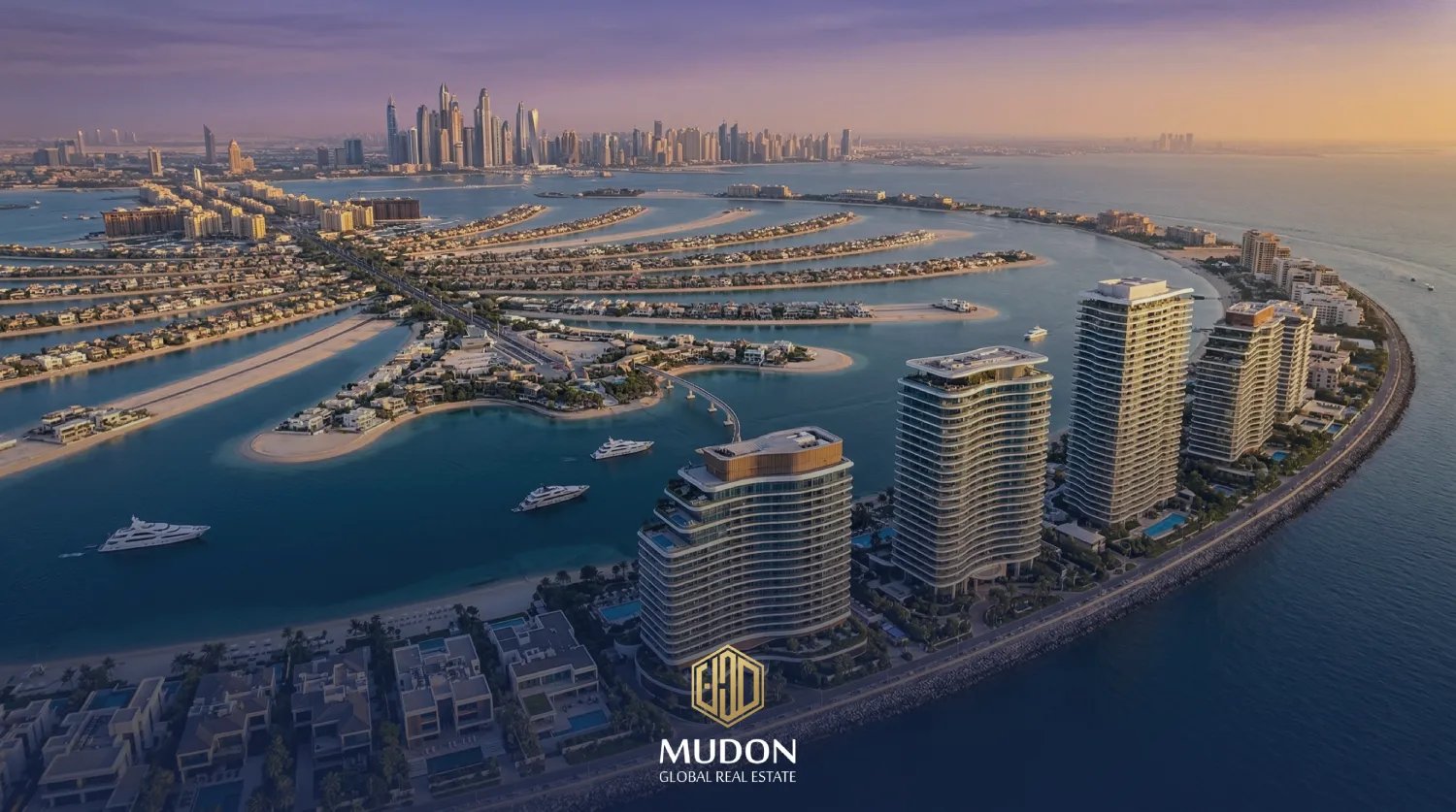
Palm Jumeirah sits at the apex of the global real estate hierarchy, surpassing the finest districts of London and New York in attracting discerning capital. In Q1 2025, the Palm led global ultra‑luxury property transactions (over $10 million) for the fifth consecutive quarter, recording 111 deals worth $1.9 billion in a single quarter.
This strategic guide from Mudon Global is designed specifically for ultra‑high‑net‑worth individuals (UHNWIs) and family offices who understand that investing in Palm Jumeirah is not merely buying real estate, but acquiring a rare, irreplaceable sovereign‑quality asset.
Table of Contents
What is Palm Jumeirah? (A Mental Map for the International Investor)
Palm Jumeirah is not merely an artificial island; it is one of the greatest engineering achievements of the modern era, often described globally as “the eighth wonder of the world.”
The island extends into the waters of the Arabian Gulf in the shape of a giant palm tree. It was not designed as a mere tourist destination but established to be the primary residential stronghold for the global elite seeking an unparalleled exclusive lifestyle.
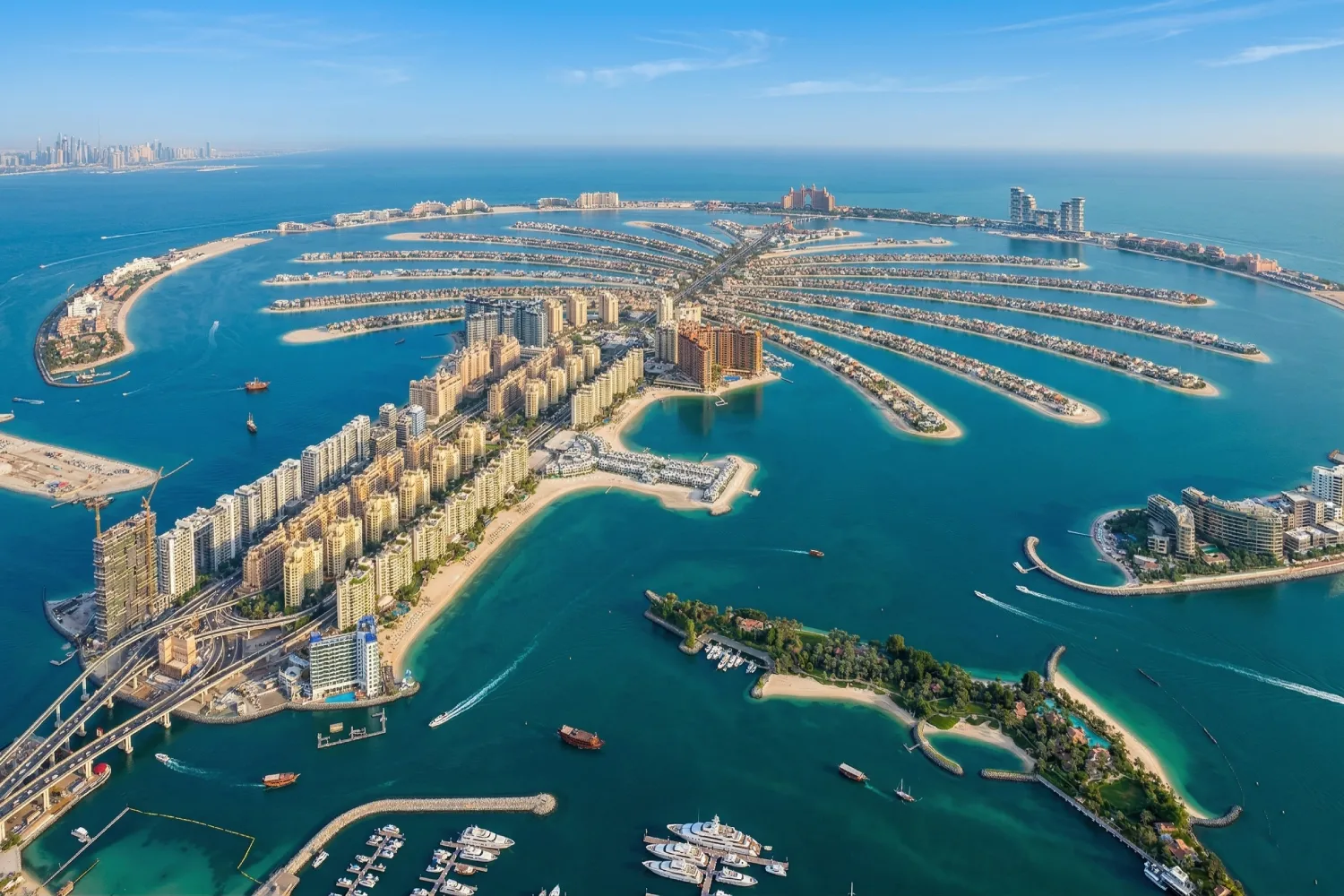
To understand its value as an investment asset, one must consider the island’s ingenious geographic planning, which is divided into three primary sectors, each serving a distinct investment strategy:
The Trunk
It is the vibrant urban core and the island’s primary axis. It hosts the finest luxury apartment complexes, upscale retail centers (such as Nakheel Mall), and parks. This section is the ideal destination for investors seeking high liquidity and active rental yields.
The Fronds (17 Fronds)
They represent the pinnacle of privacy and complete seclusion. The fronds host signature mansions and ultra‑luxury villas, each with its own private sandy beach and stringent security.
This section is the preferred refuge of billionaires, celebrities, and royal families to preserve their wealth away from the bustle of the city.
The Crescent
It is the crescent‑shaped breakwater that surrounds and protects the Palm. This strip is home to the most luxurious global resorts and hotels (such as Atlantis The Royal), and hosts the rarest branded residences that offer investors a fully serviced lifestyle with five‑star hotel services.
This exceptional combination of absolute beachfront seclusion and proximity to Dubai’s financial center makes property ownership on Palm Jumeirah a ticket into one of the world’s most exclusive gated communities.
Competitive Advantage: Investing in “Absolute Scarcity”
The economic secret behind the continuous rise in Palm Jumeirah prices can be summed up in one term: absolute physical scarcity. The island comprises 17 fronds and a single crescent, with no possibility to expand the geographic footprint or create new land.
These strict physical constraints create a fixed supply ceiling, turning every villa and luxury apartment into a “trophy asset” competed for by the world’s wealthy; its investment dynamics resemble acquiring seafront properties in Monaco.
Global branded projects (such as Dorchester and Armani) command a price premium ranging from 20% to 40% above market rates.
The ‘Jebel Ali Palm’ Effect: Does it threaten Palm Jumeirah’s crown?
As work accelerates on the larger ‘Jebel Ali Palm’ project, a critical question arises for the astute investor: will this substantial future supply reduce the capital value of Palm Jumeirah properties? The financial analysis confirms the opposite.
Palm Jumeirah has officially moved into the category of “Legacy & Mature Assets” (Legacy & Mature Assets). It is today a 100% complete ecosystem, featuring excellent operational infrastructure, an established vibrant community, and the highest concentration of five‑star hotels and Michelin‑starred restaurants in the region.
Conversely, the Jebel Ali Palm project represents a long‑term developmental investment and a natural expansion of the city. The existence of the new project does not reduce demand for Palm Jumeirah; it cements its status as the ‘original and iconic’ development that predates any other by two decades, further increasing the scarcity of its properties as Dubai’s premier elite address.
The Language of Numbers: Palm Jumeirah’s Performance in 2026
In a market driven by uniqueness, the interpretation of numbers differs. Here are the financial performance indicators for Palm Jumeirah properties in 2026:
Capital Appreciation
Performance here is exceptional. Palm Jumeirah apartments recorded the highest annual increase in Dubai at 31% up to Q3 2025. In the villas sector, ten‑year case studies show a remarkable increase of 118% (from AED 11 million to over AED 24 million).
The island recorded a record villa transaction in Frond J valued at AED 216 million, underscoring the depth of liquidity in the luxury market.
Rental Yields
Apartments yield gross returns between 5.0% and 7.3% (net between 4.0% and 5.5%). Although villas show a lower percentage yield between 3.0% and 4.5%, the absolute income is substantial; annual villa rents range from AED 450,000 to over AED 1.5 million.
Short‑Term Rentals (Holiday Homes)
Palm Jumeirah records the highest average daily rate (ADR) in Dubai at an average of AED 1,318 per night, driving gross short‑term operational yields to exceed 8%–12%.
Price per Square Foot (PSF)
The average price per square foot for villas reached AED 5,228, while for apartments it was AED 2,804. In ultra‑luxury developments, prices jump to between AED 5,000 and AED 15,000 per square foot.
Demographics and Occupancy Rates
The Palm attracts wealthy individuals, celebrities, royal families, and second‑home buyers from Europe, China, and Russia.
It maintains high occupancy rates between 85% and 90%, constrained by limited supply rather than lack of demand.
Future Pipeline (2026-2027)
Because land has effectively been exhausted on Palm Jumeirah, new projects arise either through demolition of older hotels or by utilizing the remaining strategic plots on the crescent.
This trend confines new supply exclusively to the ‘ultra‑luxury’ category, ensuring the existing assets’ value is not diluted. Here is the financial and architectural analysis of the most prominent upcoming projects:
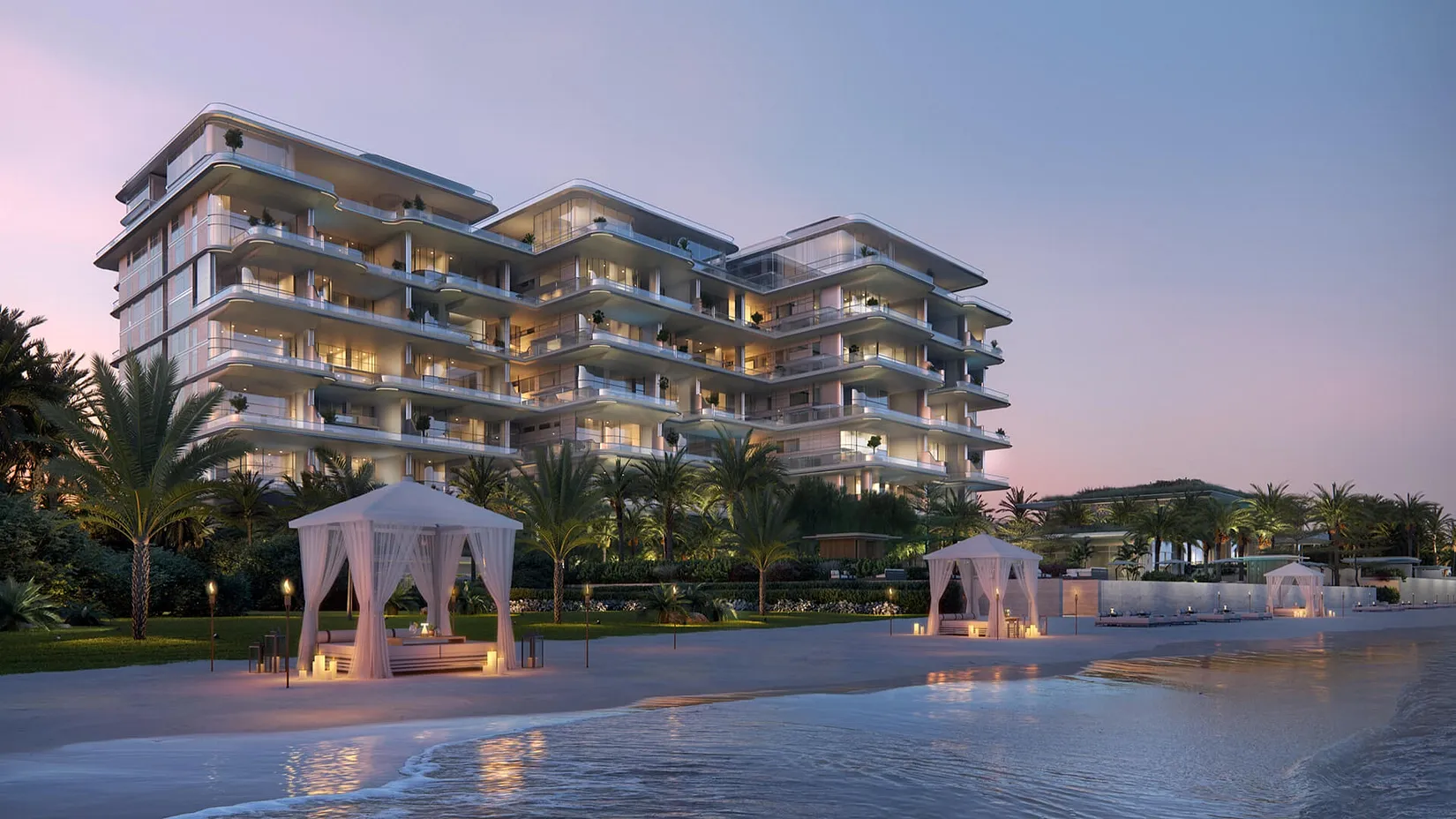
1. ORLA Project developed by Omniyat and managed by the “Dorchester Collection”
Architectural Character
This project bears the signature of the global architectural firm Foster + Partners. The development does not offer traditional apartments but “mansions in the sky,” with units featuring double‑height ceilings, living spaces that flow seamlessly between indoors and outdoors, and a private pool for almost every unit.
Investment Advantage (Brand Premium)
Entrusting property management to the prestigious Dorchester group gives investors a dual advantage: 24/7 five‑star concierge services and strict maintenance standards, ensuring exceptional resale value.
Pricing and Delivery
Prices start from AED 24 million, with expected delivery in the fourth quarter of 2026. This project serves as an ideal wealth‑preservation refuge from market volatility.
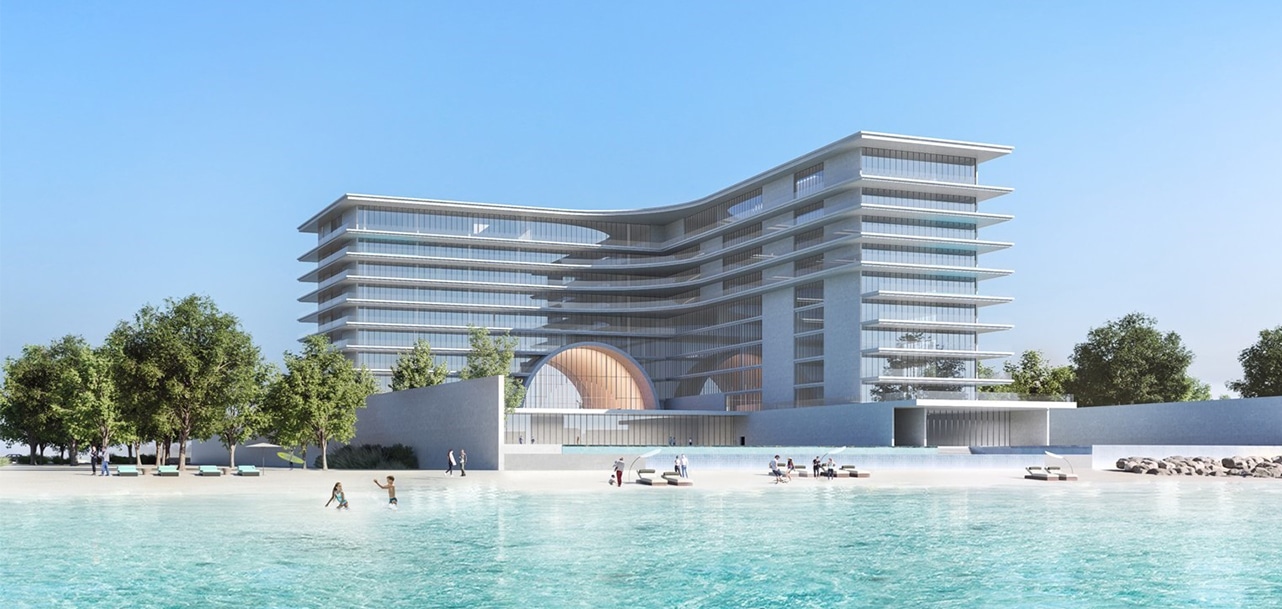
2. Armani Beach Residences project by Arada
Architectural Character
Located on the outer edge of the Palm’s crescent, it represents an artistic masterpiece where Giorgio Armani’s timeless design language harmonizes with the maritime setting.
The project comprises units ranging from two to five bedrooms, with every interior detail (from finishes to furnishings) selected under the direct supervision of the Armani studio.
Investment Advantage (Risk Mitigation)
From an investment perspective, this project reduces ‘off‑plan’ purchase risk for investors in 2026, as actual project completion has exceeded 49%.
Association with a global fashion brand creates persistent loyalty and demand among international buyers attracted to the luxury lifestyle.
Pricing and Delivery
Entry prices start from AED 21.5 million, with delivery scheduled for the fourth quarter of 2026.
3. Como Residences project by Nakheel
Architectural Character
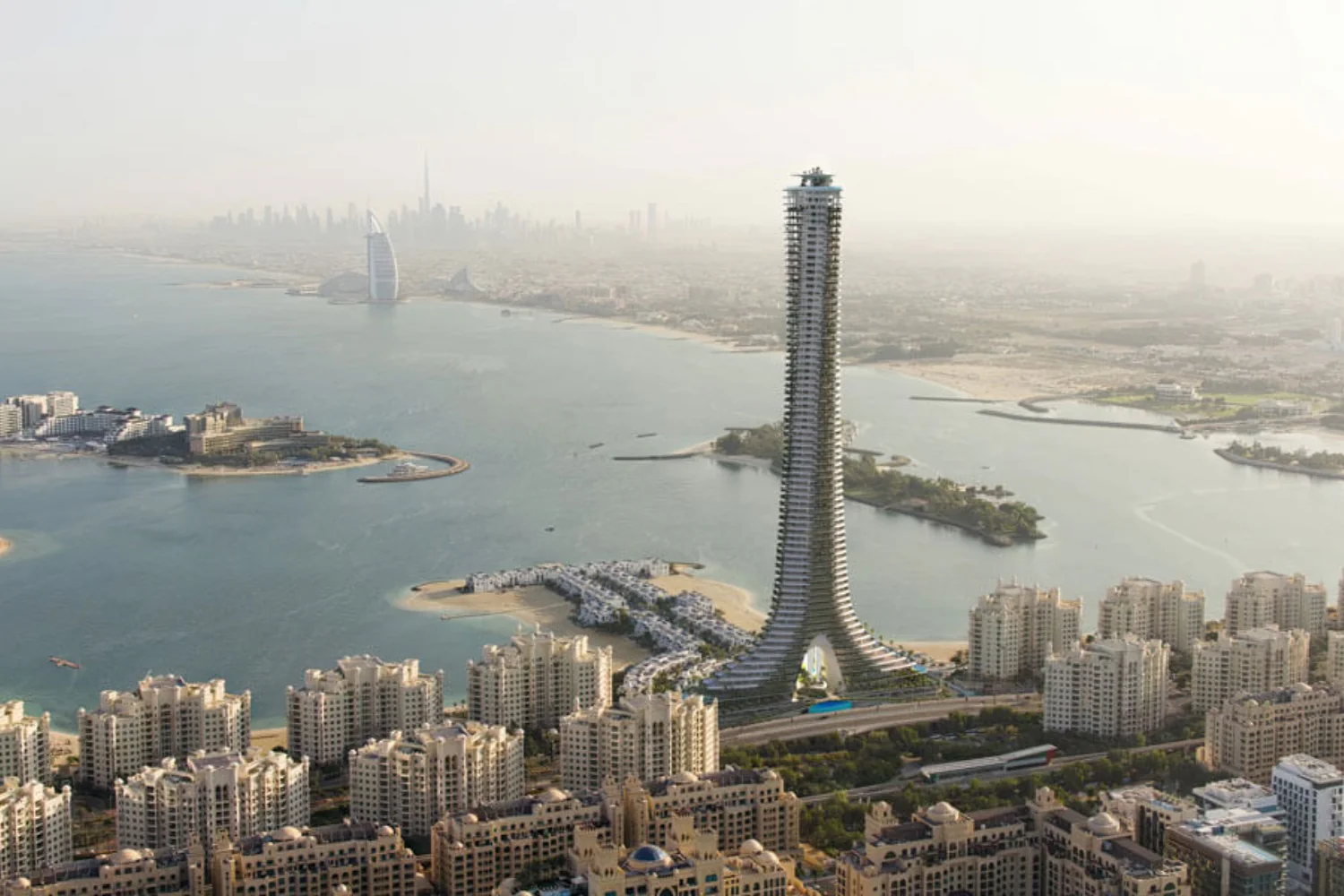
This project alters the entire Palm Jumeirah skyline. It is an iconic 71‑storey skyscraper designed with forms inspired by water ripples.
The concept centers on ‘absolute privacy,’ with only one or two residences per floor, featuring large duplexes and penthouses that offer 360‑degree panoramic views of Dubai.
The standout feature is suspended sand pools that emulate private beaches on the upper floors.
Investment Advantage (Trophy Asset)
This project represents a sovereign acquisition vehicle for billionaires. The apartments here rival ground mansions in size and attract exclusively ultra‑high‑net‑worth individuals (UHNWIs) seeking the rarest asset in the Palm’s main trunk.
Pricing and Delivery
Entry prices range between AED 21 and 33 million for primary units, rising to astronomical figures for penthouses. Delivery is scheduled for the first quarter of 2027.
Advisory Transparency: Operational Challenges and Cost of Asset Ownership (OPEX)
In true wealth advisory, we do not only calculate returns (ROI); we carefully study the ‘cost of carrying the asset’ (Cost of Carry).
Institutional investors must recognize that luxury waterfront properties require annual operating and maintenance budgets (OPEX) slightly higher than their on‑land residential counterparts, particularly for signature villas built in the early 2000s that have not undergone major upgrades.
The marine environment imposes climatic challenges related to corrosion and moisture insulation. Herein lies the paramount financial importance of a “mansion retrofitting” (Retrofitting) strategy; purchasing an older asset and upgrading its infrastructure with modern insulation systems and salt‑resistant smart home technologies is not mere architectural refurbishment but a strategic preventative action that significantly reduces annual maintenance costs, protects the property’s structural core, and elevates its final valuation in the secondary market to meet ultra‑luxury standards in 2026.
Frequently Asked Questions (FAQ)
Is it better from an investment standpoint to buy a ready villa or construct a custom‑built villa on a frond plot?
Given that buildable plots have been entirely exhausted on Palm Jumeirah, the ‘villa flipping’ strategy has emerged as the most profitable.
Major investors purchase signature villas built in the early 2000s at prices ranging between AED 30 and 40 million, then demolish or comprehensively retrofit them to meet 2026 luxury standards.
After refurbishment, these villas are resold at prices exceeding AED 80 to 100 million, achieving extraordinary profit margins that outperform any rental yield.
What is the precise investment difference between Fronds properties and Trunk & Crescent properties?
‘The Fronds’ are dedicated exclusively to private villas and gated waterfront compounds, catering to absolute privacy and the preservation of family wealth (Legacy Holds), characterized by very low resale turnover due to resident stability.
Meanwhile, the ‘The Crescent and The Trunk’ host luxury resorts, hotels, and branded residence projects.
Properties in these sections outperform financially on liquidity and flowing rental yields, especially when operated as short‑term holiday rentals.
I note that the percentage ROI for Palm villas is approximately 3% to 4%, lower than Business Bay apartments. Is this investment cash‑flow positive?
Institutional investors do not evaluate ultra‑luxury villas solely on percentage rental yield but on ‘total return’ (Total Return).
Although the percentage rental yield may appear conservative (around 4%), the absolute cash income exceeds AED 1 million annually.
More importantly, villas on the Palm have recorded 118% capital appreciation over the past decade.
The Palm is a place to multiply and protect principal capital value, not merely a tool for generating rental income.
Safeguard your wealth through absolute scarcity with Mudon Global
Investing in Palm Jumeirah requires an advisor with access to an ‘off‑market’ deal network; the most valuable properties here are bought and sold away from public platforms.
Contact our experts today to explore rare opportunities, whether you seek a trophy villa to secure your family’s legacy or a branded luxury apartment to achieve sustainable cash flows.